STF curbs precariousness: Moraes' decision questions temporary teacher contracts in Ribeirão Preto
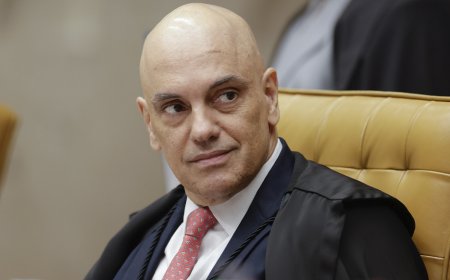
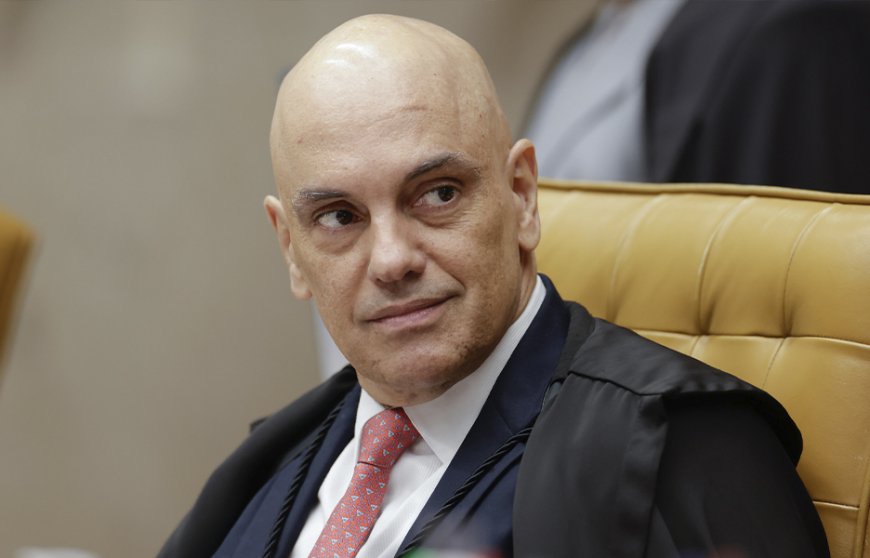
A recent decision by Minister Alexandre de Moraes at the STF could reconfigure the hiring of teachers in Ribeirão Preto, reaffirming the veto on irregular temporary contracts and the importance of public examinations. Understand the impact.
The urgency of stability: STF imposes a brake on the precarious hiring of teachers
The practice of temporary hiring of teachers by the public administration, often used as a palliative, returns to the center of the legal debate with a decision by Minister Alexandre de Moraes, of the Federal Supreme Court (STF), which directly impacts Ribeirão Preto. The measure highlights the Court's consolidated jurisprudence against the precariousness of public education and the distortion of competition rule, pointing to a scenario of restructuring in education departments.
The background of this judicial intervention is article 37, item IX, of the Federal Constitution, which allows hiring for a fixed period to meet “temporary needs of exceptional public interest”. However, what has been observed historically, and which the STF has fought against, is the trivialization of this permission. States and municipalities, as already seen in the case of Minas Gerais, create laws that allow temporary hiring in a generic and comprehensive way, without the real exceptionality required, perpetuating precarious relationships instead of investing in permanent staff.
The Supreme Court has been incisive in reiterating that such contracts must be for emergency situations and with a pre-determined period, never to meet permanent demands of the administration. According to the STF portal, in the analysis of Theme 551/RG (RE 1,066,677), the court has already defined that temporary employees are not entitled to certain labor funds, unless there is a specific legal provision, clearly distinguishing the regimes. More recently, the STF's Jurisprudence Report No. 1194 reinforced that budgetary restrictions cannot serve as a pretext for undue temporary hiring, requiring that the need be proven and legitimate.
"The Court, by majority, considered the issue constitutional...", indicating the constant deliberation on the topic and the strength of the thesis.
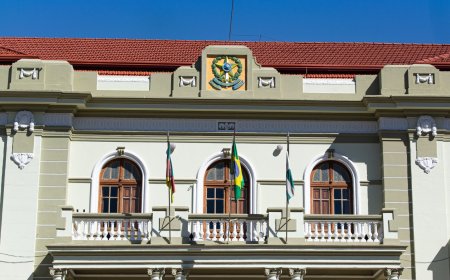
The conflict is clear: on the one hand, the need for municipalities to fill quickly gaps in the teaching staff, often citing urgency or financial constraints; on the other, the constitutional principle of public competition, which aims to guarantee meritocracy, stability and quality of public service. Moraes' decision, when examining the context of Ribeirão Preto, probably confronts exactly this contradiction, questioning whether local temporary hiring fits within the strict criteria established by the STF.
The consequences of this intervention are felt on several fronts. For temporary teachers, the decision raises a warning about the instability of their employment, many of whom live in a cycle of uncertain renewals, without the rights and guarantees of a permanent employee. For municipal administrations, it represents the need to reevaluate their personnel policies and, inevitably, plan and hold public competitions for permanent positions. In the medium and long term, the measure could push for greater professionalization and stability in the teaching staff, impacting the quality of education.
What comes now is crucial. Ribeirão Preto, and by extension other Brazilian cities with similar practices, will have to adapt to the judicial determination. This may mean reviewing current contracts, urgently opening new competitions or, in more challenging scenarios, taking legal action on the part of affected teachers. The discussion about the right to a minimum teaching salary for temporary teachers, as the STF is yet to define, is another development that keeps the topic on the boil, highlighting the complexity and social impact of the Judiciary's decisions on the lives of thousands of educators and students.
Minister Alexandre de Moraes' decision in relation to temporary teacher hiring in Ribeirão Preto is another chapter in the incessant battle for constitutional compliance in the public service. To what extent will municipalities be able to balance their emergency needs with the requirement for public examinations, guaranteeing the dignity and stability of education professionals, is the question that remains in the air and will guide the next steps in this challenging equation.
What's Your Reaction?
 Like
0
Like
0
 Dislike
0
Dislike
0
 Love
0
Love
0
 Funny
0
Funny
0
 Angry
0
Angry
0
 Sad
0
Sad
0
 Wow
0
Wow
0