Trump's Peace Council: a new order or the dismantling of global governance?
Former President Trump's controversial initiative to create a 'Peace Council' divides nations, threatens UN institutions and reflects a unilateral American turn with profound impacts.

Trump's unilateral ambition challenges UN multilateralism
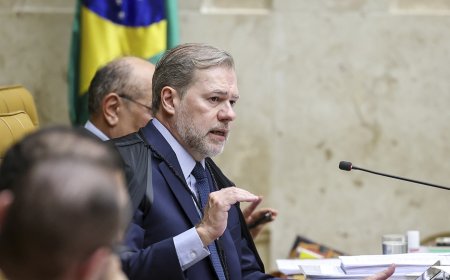
Donald Trump formalized the creation of his long-awaited “Peace Council” in January 2026, a move that, according to CNBC, was endorsed by the United Nations Security Council. The initiative, presented as a new force for resolving global conflicts, especially the impasse in Gaza, emerges against a backdrop of growing skepticism and international divisions, openly questioning the role and relevance of the United Nations (UN).
The background for the emergence of this Council is not random. Since February 2025, the Trump administration has promoted a strategic withdrawal and funding cut from 66 international organizations, including 31 UN bodies, as detailed by executive orders from the White House. This stance, justified by the US State Department as a response to "organizations that have strayed from their mission, acting contrary to US interests and propagating anti-Semitism", signals a deep distrust of existing multilateral structures.
The justification for divestment is not limited to issues of security or geopolitical alignment; it delves into an ideological critique. State Department documents explain that many of these organizations would be in service of a "globalist project rooted in the discredited 'End of History' fantasy", promoting "DEI (Diversity, Equity and Inclusion) mandates", "gender equity campaigns" and "climate orthodoxy" that aim to "restrict American sovereignty". This vision directly collides with the principles that govern global diplomacy since the post-Cold War period.
"Currently, abnormal volumes of simultaneous accesses still cause some slowness", the fund said in a note.
The international repercussion of the “Peace Council” has been, as expected, mixed. While some nations mull membership, others express significant reservations. The New York Times reported the controversial cancellation of the invitation to Canadian Prime Minister Mark Carney. European countries such as Sweden, Slovenia and Norway declined invitations to join the new body, citing "reservations to the proposal", according to CNBC. BBC News highlighted UK Foreign Secretary Yvette Cooper's concerns about the inclusion of Russian President Vladimir Putin in a peace forum.
But the most sensitive point is another: the potential replacement or weakening of the UN. French Foreign Minister Jean-Noel Barrot made Paris' position clear, as reported by PBS News, "Yes to the implementation of the peace plan presented by the president of the United States, which we wholeheartedly support, but no to the creation of an organization, as presented, that would replace the United Nations." Reuters corroborated this concern, indicating that diplomats fear that the initiative "could undermine the work of the United Nations".
The consequences of this unilateral turn are not merely diplomatic; they are tangible in the lives of millions of people. The Better World Campaign, in discussing the impact of previous cuts, recalled that the American defunding of UNESCO in 2011 and subsequent withdrawal in 2018 resulted in "the interruption or elimination of valued programs around literacy, press freedom and Holocaust education." More recently, NPR reported that Washington's decisions in 2025 to cut foreign assistance via USAID led to the closure of hundreds of global health programs, highlighting the ripple effect of these moves on humanitarian assistance and development.
Trump's "Peace Council," therefore, is not just a new structure, but a symptom of a reconfiguration of global power. It raises the fundamental question: what will be the future of international governance in a world where the greatest power actively seeks to defund and, to some extent, delegitimize the institutions it helped create? The international community is watching closely, pondering whether this is the dawn of a new era of peace or the harbinger of an even greater fragmentation in the global order.
What's Your Reaction?
 Like
0
Like
0
 Dislike
0
Dislike
0
 Love
0
Love
0
 Funny
0
Funny
0
 Angry
0
Angry
0
 Sad
0
Sad
0
 Wow
0
Wow
0