French rejection of the 2026 World Cup boycott exposes fissures in the transatlantic alliance
France rules out a boycott of the 2026 World Cup, hosted by the USA, amid diplomatic tensions over Donald Trump's 'obsession' with Greenland. Understand the split in Europe and the future of transatlantic relations.
Football diplomacy: the European dilemma in the face of Trump's threats over Greenland
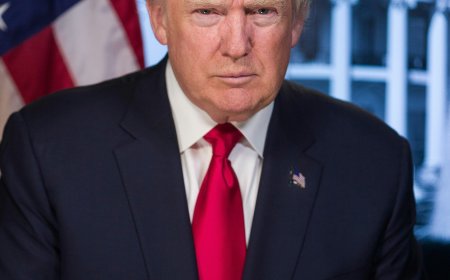
While European parliamentarians call for a boycott of the 2026 World Cup, the French Sports Minister, Marina Ferrari, confirmed that the country will not join such a movement. The decision, released this Wednesday (21) by the agency Ansa Brasil, occurs in a scenario of escalating diplomatic tensions without precedents, where former American president Donald Trump's territorial ambitions over Greenland, an autonomous territory of Denmark, threaten to redefine transatlantic relations and the very character of sport as a stage for political protests.
The saga of Greenland, a strategic Arctic island, has become a catalyst for friction. Since 2019, when Trump openly expressed his desire to buy Greenland – even proposing values and even postponing a visit to Denmark after Copenhagen's refusal – the issue has been a sensitive point. Now, with the former president returning to the US political stage, his threats to impose tariffs on European nations that oppose the 'acquisition' or 'incorporation' of the Arctic territory gain new momentum and weight, forcing allies to consider a response.
The severity of Trump's threats, which, according to a report by BBC News Brasil, include tariffs against eight European allies — Denmark, Norway, Sweden, France, Germany, the United Kingdom, the Netherlands and Finland —, triggered emergency meetings in the European Union. The American president even declared, according to Terra, that the United States "will remember" the lack of support. For Europe, Trump's stance is not just an eccentricity, but a direct attack on sovereignty and a test of loyalty that erodes the trust built over decades in the alliance with the US, as pointed out by Folha de S.Paulo.
"For Europeans on the receiving end of this kind of statement, the president's threats to acquire Greenland 'the easy way' or 'the hard way' have further eroded the trust that was central to the alliance with the United States for decades."
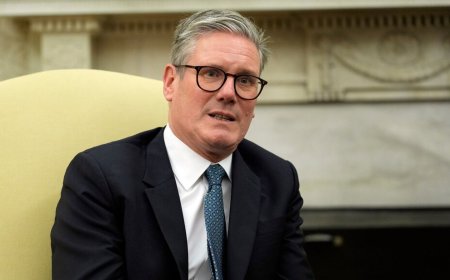
The call by European parliamentarians for a boycott of the 2026 World Cup, hosted by the USA, Canada and Mexico, appears as an instrument of pressure in the midst of this crisis. G1 reported that the suggestion would be a response to "Trump's escalating obsession with Greenland." Germany, for example, was still evaluating the possibility of a boycott, as reported by Band. However, the French position of non-membership reveals an internal division within the European bloc and a pragmatism that could weaken any coordinated response.
The consequences of such a diplomatic clash transcend the field of foreign policy. The G1, in an article from Fantástico, warns that Trump's threat in Greenland not only weakens Europe, but "puts NATO at risk of rupture". In a more extreme scenario, the European Union is considering, for the first time, the use of its "anti-coercion instrument", a legal tool designed to combat undue economic pressure from third countries. This escalation of tension could have a lasting impact on global security and the economy, with the possibility of a trade war adding to already existing geopolitical disputes.
France's decision to move away from a boycott can be interpreted in different ways: a recognition of the futility of such a measure, a political calculation to avoid even greater retaliation, or a difficulty in unifying European Union countries around such a drastic response. In any case, the French refusal puts the ball in the court of the other allies, who will have to decide whether they prefer the path of symbolic confrontation or silent diplomacy, while the shadow of Donald Trump's ambitions continues to hover over the Arctic and the courts of the next World Cup. What gets screwed in this struggle are international relations, which are deteriorating, and sport, which is increasingly instrumentalized.
What next? The international community awaits the next decisions of other European heavyweights, such as Germany, and the reactions of the Danish government, which maintains its firm stance. Furthermore, the potential activation of the EU's "anti-coercion instrument", if confirmed, would mark a significant precedent in how the bloc deals with external pressure. Stay tuned for developments in this crisis, which mixes power, justice and the limits of global diplomacy in an increasingly volatile world.
What's Your Reaction?
 Like
0
Like
0
 Dislike
0
Dislike
0
 Love
0
Love
0
 Funny
0
Funny
0
 Angry
0
Angry
0
 Sad
0
Sad
0
 Wow
0
Wow
0